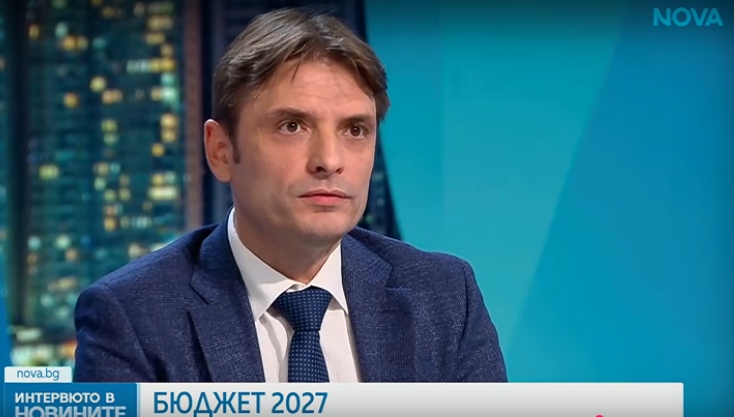
“People expect their incomes to continue growing, but there are no clear messages in this direction. We only heard from the Prime Minister yesterday. Until then, there had been nothing concrete,” said CITUB President Plamen Dimitrov in an interview on NOVA News.
According to him, the proposed 5% increase in salaries in the public sector is insufficient to compensate for the rising prices that people experience on a daily basis. The trade union is calling for the minimum wage to reach €690 and for incomes to increase by at least 10%. The demand applies both to the public sector and to employees in the private sector.
Dimitrov noted that the protest actions had been organised at short notice, following initiatives in various cities. According to him, the aim is to ensure that employees clearly express their position before the budget for the coming year is submitted.
The issue of the minimum wage is also linked to the mechanism for determining its level, which was agreed upon by the social partners. Dimitrov emphasised that the trade union is not withdrawing from the agreement reached, but believes that the regulatory framework has not yet been fully completed. “I am not backing away from what we agreed. We reached an agreement together, and these rules will apply going forward. We will use them to determine the minimum wage, but not for 2027,” he stated.
The Bulgarian Industrial Association (BIA) also supports the mechanism for determining the minimum wage, but draws attention to the other costs that businesses have to cover. Stanislav Popdonchev pointed out that companies do not employ only people earning the minimum wage and that any assessment of the budget proposals must take into account the overall burden on employers. “Businesses fully supported this mechanism, as did our colleagues from CITUB,” he said. According to him, the compromises made during discussions on the cost of living and the adequacy of the minimum wage do not change the principle on which it is determined.
However, he stressed that the proposed increase in the maximum social security income threshold must also be taken into account. Under the proposed parameters, the maximum insurable income is expected to reach €2,400, which would increase social security contributions for higher-income employees and their employers.
Popdonchev also expressed reservations about some of the proposed amendments to tax legislation. Among the measures under discussion are the taxation of excess profits in certain sectors and the tax treatment of food vouchers, which, according to him, could result in an additional burden on employees as well.
CITUB is also calling for a cautious approach to changes in the tax assessments of primary residences, particularly in the case of elderly people and low-income households. Plamen Dimitrov believes that there is room for higher incomes without this automatically leading to a deterioration in the budget balance. According to him, the projected economic growth could generate additional tax revenues that could be allocated to increasing wages.
Business representatives stated that a final assessment of the budget can only be made once all the parameters have been presented and discussions with the Ministry of Finance have taken place. It is then expected to become clear how expenditure will be allocated, what revenues are forecast and what the actual impact of the proposed measures will be on employers and citizens.