Maria Mincheva, Deputy Chair of the Bulgarian Industrial Association, on “Business Start,” 16 Feb 2026
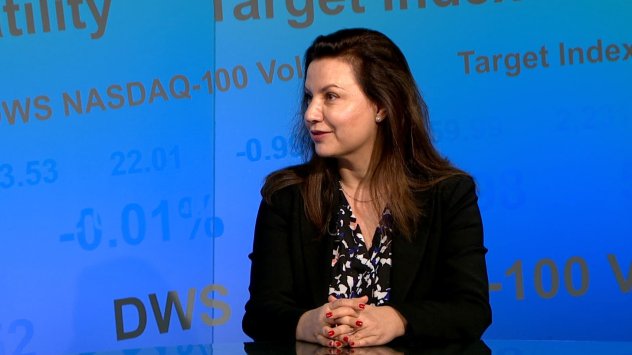
There is a visible awakening among the European elite regarding the reality in which businesses operate and why statistics are changing so negatively. This raises the question of whether the policies adopted during the previous mandate of the European Commission contributed to the loss of the EU’s industrial and economic power. This signal has been quite clearly sent and received by the European elite. This was stated by Maria Mincheva, Vice President of the Bulgarian Industrial Association, on the program “Business Start” on Bloomberg TV Bulgaria, hosted by Hristo Nikolov.
Energy - Priority Number One
“Competitiveness is now at the core of all policies,” the guest commented. There are already a number of proposals to simplify legislation. The introduction of restrictions often leads to your goods and products becoming much more expensive. There is now consensus on several measures - one of them being the price of electricity. The voice of reason is being heard that the EU must seek clean energy, regardless of where it comes from. The question is not which technology, but what result we are seeking.
According to Mincheva, the creation of a single energy market is a fundamental issue. Energy prices in the EU are more than four times higher than in the United States and twice as high compared to China. This leads to a loss of production capacity. Europe must not turn into a museum of industry - this was one of President Macron’s main messages.
More European Consumption – Solution or Problem?
“Encouraging consumption in the EU is a very good initiative, but it does not take into account the fact that producers have capacity and can satisfy a certain volume of demand,” Mincheva explained. This initiative should rather be directed at specific sectors and considered case by case.
She added that the unwillingness of states to remove protectionist measures is seen by all as the greatest untapped potential. Businesses are already insisting on specifics, since promises do not get the job done. Concrete proposals with a clear timeline are needed - ones that can be implemented much more quickly.
Where Is Bulgaria?
For example, the banking and capital unions are still not completed. Slow decision-making and the ability of states to impose vetoes are among the major obstacles. In this two-speed Europe, Bulgaria must decide whether it wants to be on the periphery—geographically and politically. “The big question is whether we want more integration or not. We see how every step toward deeper integration leads to a sharp public reaction, which means politicians have failed to explain the issue,” the guest noted.
Mincheva shared that European businesses have nearly twice as much senior management dealing with regulatory compliance. This cumbersome system makes it impossible to compete with countries like the United States and China. The EU is not a single state, but a bloc.
There are two legal forms resembling the “28th regime” currently under discussion. This is not a new idea, but over the years all such ideas have failed. The main reason is the reluctance of states to concede authority in certain areas.
We hope to see Europe take real action to become an economic power again, rather than an economic dwarf. “If concrete measures are not presented within this year, the outlook is not rosy. Shock therapy is needed,” Mincheva stated firmly.
She warned that in Bulgaria we live in a parallel reality and fail to realize how important industry and business are, instead, we tend to try to restrict them. At the moment, businesses feel very alone in terms of people they can work with.