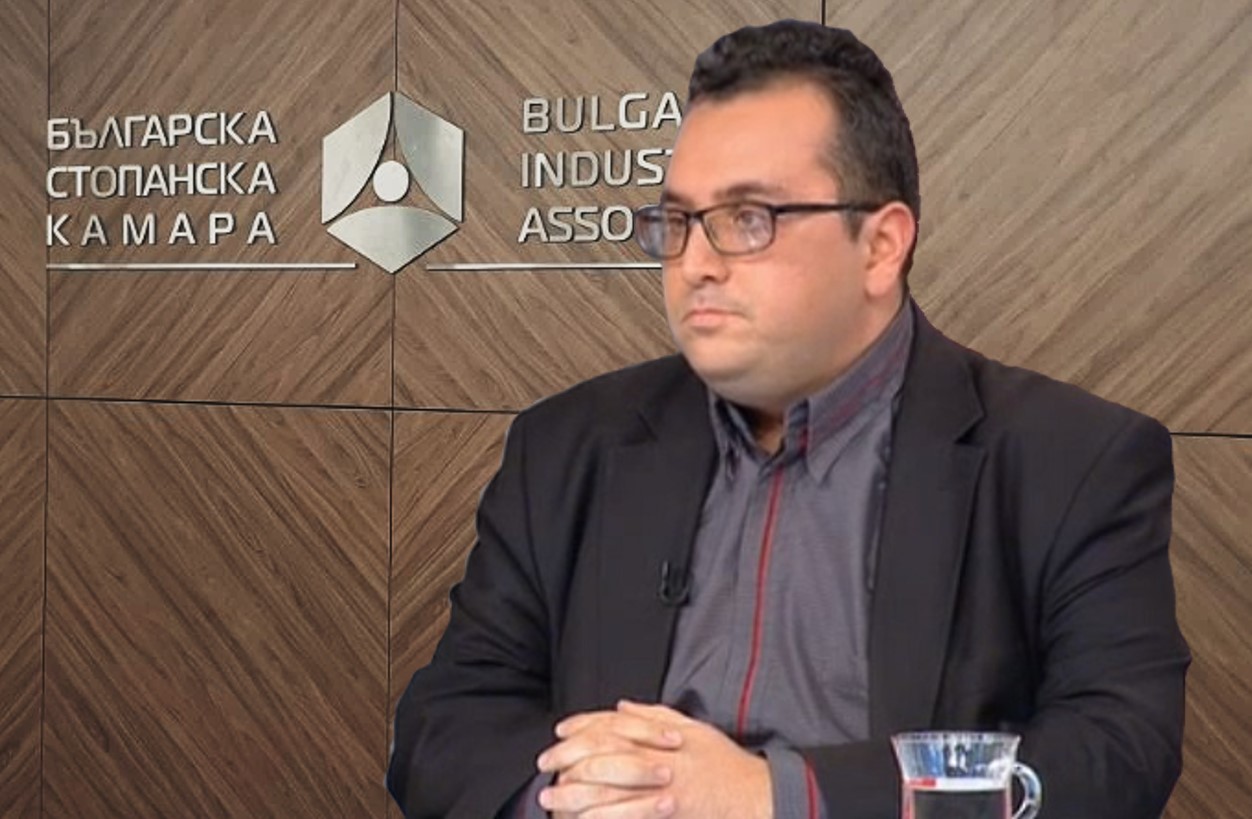
The BIA Arbitration Court takes pride in its arbitrators. Today, we introduce Christian Mitev.
Christian Mitev graduated in Law from Burgas Free University in 2003. At the same time, from 2003 to 2007, he worked as an insurance agent.
From 2008 to 2009, he served as legal counsel to the Burgas Municipal Council, and from 2009 to 2014, as legal counsel to SKAT Ltd.
Between 2011 and 2014, he was a municipal councillor at the Burgas Municipal Council. From 2014 to 2021, he served as a Member of Parliament in the 43rd and 44th National Assemblies of the Republic of Bulgaria, where he also served as Deputy Chair of the Legal Affairs Committee.
He is a member of the Burgas Bar Association and, since May 2023, has been the host and presenter of the television programme “Society and Law” on SKAT TV.
Christian Mitev’s professional interests include civil, commercial and administrative law, as well as copyright and related rights.
In 2019, he received the “Economy in the Light” award in the category “Legislation or administrative practice contributing to the reduction of the shadow economy and improvement of the business environment”. The award recognized his bill amending Article 37(2) of the Accounting Act, which reduced the administrative and financial burden on small businesses.
Since 2022, Christian Mitev has been a member of the Arbitration Panel of the BIA Arbitration Court. Here is what he shared about his experience:
What attracted you to arbitration?
The BIA Arbitration Court is an institution that has an excellent reputation among the Bulgarian business and legal communities. Therefore, when I was invited to join its Arbitration Panel, I accepted immediately.
For me, it is both an honour and a responsibility to contribute to further strengthening the reputation and standing of the Arbitration Panel by applying the experience and knowledge I have accumulated to the resolution of cases brought before the BIA Arbitration Court.
It is extremely valuable and rewarding to work alongside the other arbitrators, who are unquestionably established professionals with impressive careers and impeccable reputations.
What are the most common challenges in arbitration proceedings?
Arbitration does not have coercive powers when it comes to establishing the facts of a case. For example, witnesses give evidence when brought before the tribunal by the parties, rather than being summoned by the tribunal. Similarly, an arbitral tribunal cannot impose sanctions on third parties who, for instance, refuse to produce a particular document in their possession.
These challenges can nevertheless be overcome, particularly because the cases before arbitration courts are predominantly commercial disputes and the rules governing the burden of proof provide sufficient incentive for the parties to present their own evidence using the means available to them.
Another potential issue is that one of the parties may be in a significantly stronger economic position than the other, which could create challenges concerning equality between the parties in the conduct of the proceedings.
At the BIA Arbitration Court, this issue is addressed through the Court’s Rules, which limit opportunities for procedural obstruction and help ensure that the actual circumstances and respective positions of the parties are properly established.
When does the resolution of a dispute bring satisfaction to the parties and to you as an arbitrator?
When a dispute is resolved promptly, the parties have not attempted to obstruct or unduly delay the proceedings, but have focused solely on substantiating their respective positions, and, after the arbitral award has been rendered, do not challenge it before the Supreme Court of Cassation but are satisfied with the quality of the justice they have received.
This demonstrates that the arbitral tribunal has fulfilled the mandate entrusted to it by the parties resolving the dispute competently and within a reasonable timeframe, and has given real substance to the concept of arbitration as a faster and more effective alternative to state-court proceedings.
What advice would you give to companies facing unresolved commercial disputes?
Without hesitation, I would advise them to turn to the BIA Arbitration Court.
Arbitration proceedings are considerably faster, more efficient and more effective than proceedings before state courts. All relevant evidence can be presented, with the parties generally paying a single arbitration fee and, where necessary, additional costs for expert witnesses.
Arbitration proceedings are conducted in private, making them fully confidential, unlike proceedings before state courts, which are generally public.
Arbitration is not governed by all of the procedural rules set out in the Civil Procedure Code and is therefore more flexible. The parties themselves select highly qualified arbitrators whom they trust to hear and resolve their legal dispute, rather than relying on the random allocation of cases that is characteristic of state-court proceedings.
An arbitral award has the force of res judicata and is enforceable in the same way as a judgment issued by a state court. In addition, Bulgaria is a party to the New York Convention on the Recognition and Enforcement of Foreign Arbitral Awards and to the European Convention on International Commercial Arbitration. These international instruments provide an established framework facilitating the recognition and enforcement of Bulgarian arbitral awards abroad.
All of these factors clearly demonstrate the advantages of arbitration in the resolution of commercial disputes. I hope that, in the future, an increasing number of Bulgarian companies will include arbitration clauses in their contracts, providing for potential disputes to be resolved by the BIA Arbitration Court.