“From the standpoint of the governing majority, this is the realistic budget. First and foremost, this budget will be implemented for five months—the greater part of the year has already passed under the extension laws. If we have to define it, it is like a final heating bill from Toplofikatsiya. It does not matter whether it is a good or a bad budget—it is a bill that arrives when things have already happened. In recent years, we have witnessed an absolutely voluntaristic budget policy. And it has come to the point where the heating meter reader says: ‘Your heating was on, but you kept your windows open, you did not replace your appliances with energy-efficient ones, and now you have to pay the bill even though the heat has escaped through the window.’
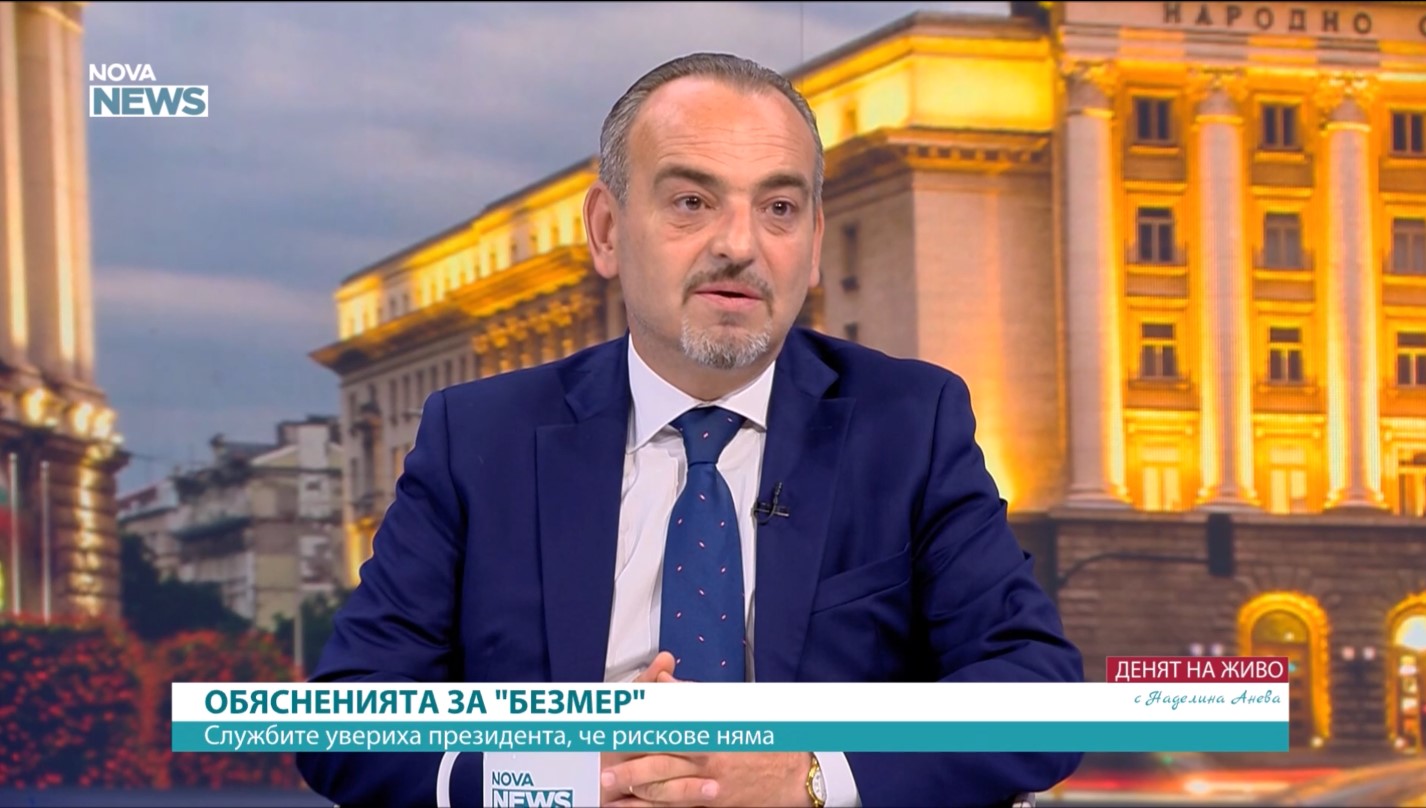
This was stated by BIA Chairman Dobri Mitrev on Nova News’ “The Day Live.”
He predicted that the budget deficit at the end of the year would be lower than the 5.7% set out in the Budget Law, suggesting that additional reserves and buffers may have been included in view of the unstable global situation, which is driving up energy prices and, consequently, affecting the overall economic outlook.
“With regard to external debt, things are more or less the same. If the state does a good job of collecting revenues and we absorb the funds under the European programmes, there is no need for the full amount of debt envisaged in the Budget Law to be taken on,” Dobri Mitrev said, stressing that he saw no reason for the president to veto the law.
Asked about the conflict in Iran, the BIA chairman said he did not expect a direct impact on Bulgarian territory or citizens, but there would certainly be negative consequences from higher oil and other commodity prices.
“After every missile is launched or every ship hits a mine, prices go up, and this affects everyone. In the near future, we do not expect a significant reduction in the prices of oil and its derivatives, and this also affects citizens’ purchasing power,” Dobri Mitrev said.
According to the BIA chairman, the new mechanism for calculating working time is fair to all those who work eight hours a day, because it is not right for someone working four hours to have the same rights as someone working an eight-hour day.
With regard to the minimum wage, Dobri Mitrev recalled that it was increased by 12% as of January 1 this year, meaning that it cannot be said that minimum incomes are being frozen, nor has Article 244 of the Labour Code been repealed.
“Freezing the application of Article 244 of the Labour Code should encourage us to sit down at the negotiating table and reach an effective solution. What is at issue is establishing objective criteria that the minimum wage should meet, so that it also complies with the European directive. What is needed is a little political will, with everyone making the compromises that are acceptable,” the BIA chairman said.
“We negotiated with the trade unions last summer, as well as this spring. Our positions were very close; only a few details remained. But if we turn our red lines pink, or make them an even lighter shade, we can reach a mutually acceptable solution that satisfies both workers and employees,” Dobri Mitrev said.
He clarified that there are numerous reasons for employing people at the minimum wage. For example, in the private security services sector, there are almost tens of thousands of retired employees of the Ministry of Interior and the Ministry of Defence who receive the minimum wage alongside their pensions.
“There are also quite a few people fictitiously employed on four-hour contracts, as part of the grey economy that we have been warning about for years and which harms legitimate employers because it distorts the competitive environment. It is the state’s responsibility, through its supervisory functions and institutions, to tackle these practices,” Dobri Mitrev said.
According to him, many such cases are also prompted by the workers themselves: “There are people who are deeply in debt and do not want to have an official income against which enforcement orders can be imposed.”
“In their election programme, the governing parties promised to maintain the tax and social security model. We insist on seeing this set out in the government programme as well, which I expect to become a reality in the autumn,” the BIA chairman added.
He also said that employers’ organisations expect the government programme to include measures for the technological modernisation of the economy, including digitalisation, robotisation and artificial intelligence, as well as to place greater emphasis on the legal and business environment, where predictability and security should prevail.