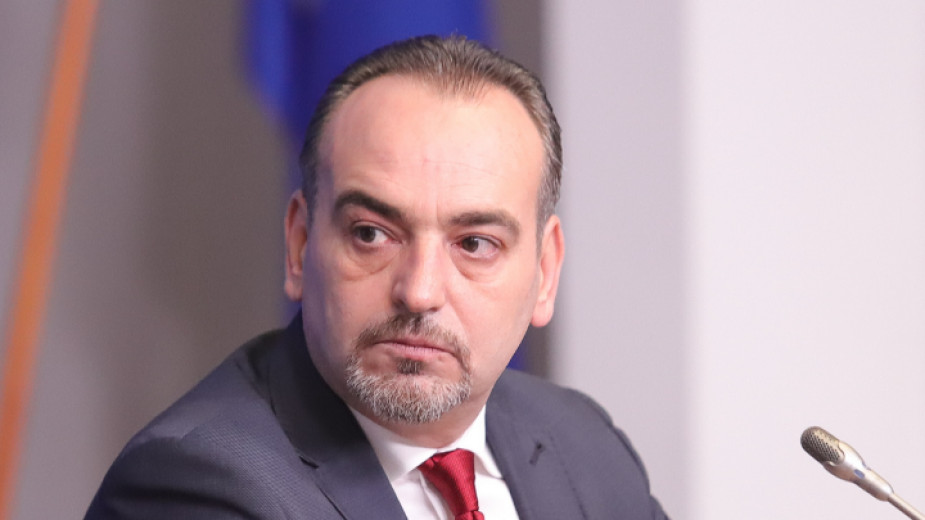
For businesses in Bulgaria, the country’s record-low result in the 2025 Corruption Perceptions Index is a signal of deep-rooted problems that can no longer be explained by external factors or temporary crises. Because of corruption, billions of leva are lost to the economy each year in the form of lower growth and inefficient allocation of resources. This was stated to BTA by Dobri Mitrev, President of the Bulgarian Industrial Association (BIA) and rotating Chair of the Association of the Organizations of Bulgarian Employers (AOBE), in connection with last year’s annual Corruption Perceptions Index data, published today on the website of the international organization Transparency International. Bulgaria recorded its worst score since 2012, ranking 84th out of 182 countries with only 40 out of 100 points.
“The result is a clear signal of a systemic problem that can no longer be explained by temporary political crises or external factors. For businesses, this means greater uncertainty, higher transaction costs, and lower predictability of the regulatory environment. When a country is persistently perceived as corrupt, it directly affects investment interest, the cost of capital, and companies’ willingness to expand,” said Mitrev. He noted that the most affected are the honest companies that operate “in the open” and follow the rules.
According to him, such results could slow Bulgaria’s path toward the OECD (Organisation for Economic Co-operation and Development). The fight against corruption and the rule of law are among the key criteria for OECD membership, he reminded. Bulgaria’s ranking near the bottom sends a negative signal to international partners and calls into question the real progress of reforms. If these trends persist, the accession process may not only slow down but also require additional, more demanding commitments from the state.
In response to a question about whether Bulgarian businesses adapt to the corrupt environment and what the losses are, Mitrev emphasized that honest businesses do not adapt, they pay the price. “What we see is a distortion of competition: companies that refuse to participate in corrupt practices lose public tenders, markets, or administrative time,” he explained. Direct losses are linked to missed opportunities, higher compliance costs, and legal protection expenses. Indirect losses are even more serious: demotivation for investment, loss of entrepreneurial energy, and human capital outflow. The financial impact is difficult to calculate precisely, but various estimates indicate billions of leva are lost annually to the economy due to lower growth and inefficient resource allocation.
Employers’ vision for formalizing high-shadow-economy sectors
To overcome the crisis, employers’ organizations call for digitalization of administrative processes and electronic payments, reforms in the judicial system, public procurement, and regulatory bodies, equal enforcement, and incentives for voluntary transition out of the shadow economy.
“Employers’ organizations have long advocated for a comprehensive approach. First, equal and predictable oversight based on risk analysis, not campaign-style or selective enforcement. Second, digitalization of processes, including electronic payments, activity traceability, and limiting direct contact between businesses and control authorities. Third, incentives for voluntary compliance, especially for small firms, combined with real sanctions for systemic violators,” Mitrev said. Only in this way can the harmful practice of “negotiating the rules” be stopped.
Reasons for the decline in competitiveness
From the business perspective, the decline in Bulgaria’s economic competitiveness is due to several factors: chronic political instability, lack of long-term policies, weak administration, and delayed structural reforms. Added to this are infrastructure issues, a shortage of skilled labor, and inconsistent regulation. The most urgent measures, according to Mitrev, are restoring institutional stability, reforming public administration, accelerating investment in infrastructure and education, and genuinely improving the business environment by reducing administrative burdens.
Business expectations from the new regular government
Businesses expect clear political will and consistency from the new regular cabinet. Mitrev emphasized that reforms in the judicial system, public procurement, and oversight and regulatory authorities are urgent.
“We expect transparent rules, a predictable regulatory framework, and effective anti-corruption measures at all levels. It is crucial for us that the government treats business as a partner, not as a source of problems or merely a fiscal resource. Only with such a change can we speak of sustainable economic growth and restore trust in the state,” concluded Dobri Mitrev, President of BIA.