Enabling Europe’s Transition to the Next Generation of Energy Storage
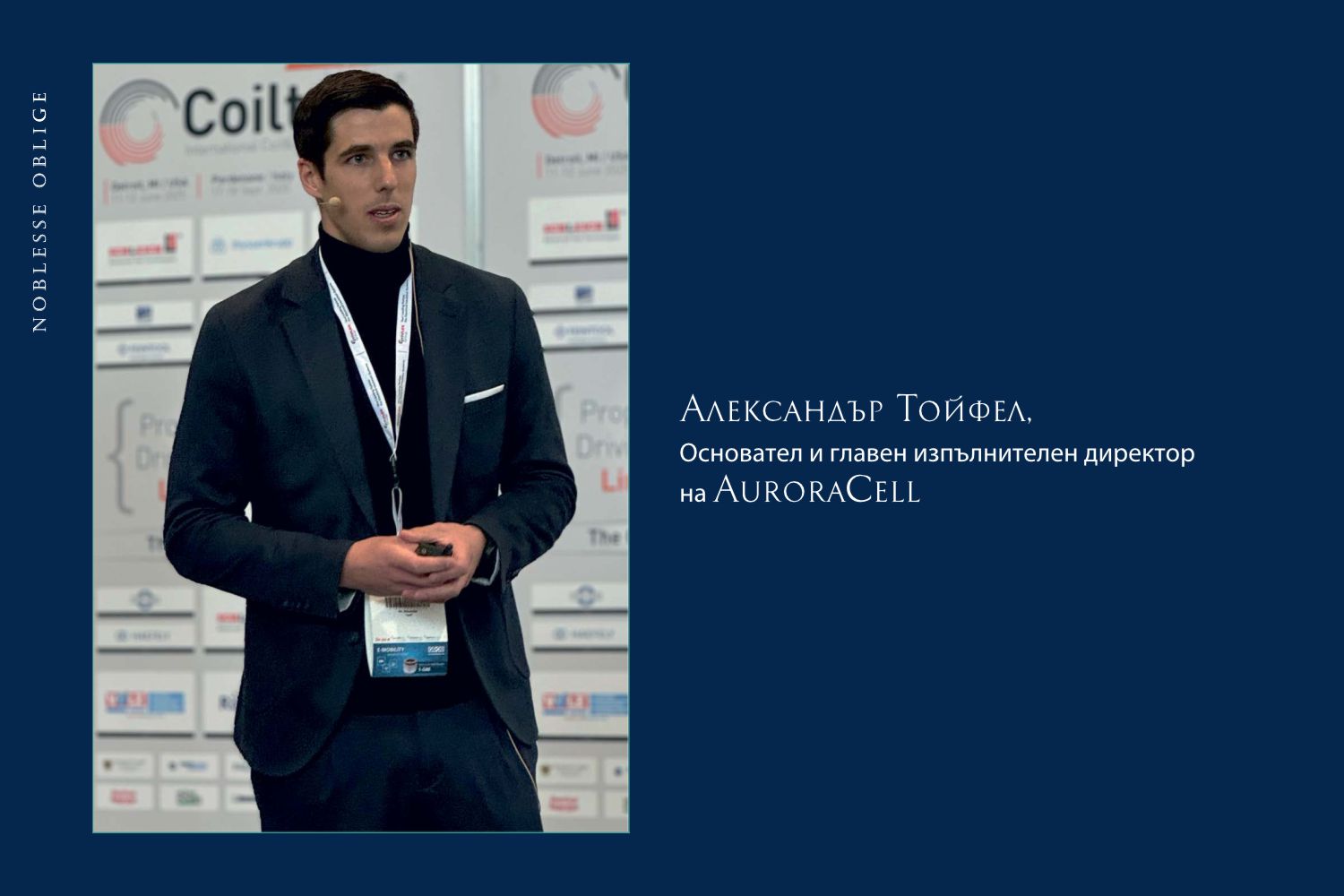
Interview with Alexander Teufl, Founder & CEO of AuroraCell
AuroraCell is part of a new wave of European companies working to bridge the gap between rapidly evolving battery technologies and real-world industrial applications. Founded in Bulgaria and operating across Europe, the company focuses on making next-generation solutions such as sodium-ion and solid-state batteries accessible to key industries.
Originally from Austria, founder Alexander Teufl brings more than a decade of experience in the battery industry. Throughout his career, he has built strong international connections across key markets including China, the United States, Korea, Japan, Southeast Asia, the Middle East, and Europe — forming the foundation of AuroraCell’s global network and its early access to emerging battery technologies.
AuroraCell is positioning itself at the forefront of next-generation battery technologies. What was your motivation to start the company?
I started AuroraCell with a very clear mission: to make the newest battery technologies accessible to Europe.
Battery innovation is evolving extremely fast, and much of that development is happening outside Europe. If we want to remain competitive, we need faster access to these technologies and the ability to translate them into real-world applications.
From my experience, I saw that the challenge is not only technological — it is also about access, networks, and connecting the right partners. AuroraCell was built to help close exactly that gap.
Why did you choose Bulgaria as your base?
There are both strategic and practical reasons behind that decision.
Bulgaria offers a very attractive environment for building a company — from a competitive tax system and strong access to the European market to a geographically advantageous position.
What stands out even more, however, is the mindset. There is a very pragmatic and solution-oriented way of working here, with a strong focus on execution. In a fast-moving industry like battery technology, that is a significant advantage.
What were the biggest challenges in the early stages?
One of the main challenges was navigating regulatory and bureaucratic requirements. Batteries are highly regulated products, and building the right structures takes time, persistence, and attention to detail.
Another challenge is perception. Many people still think that “a battery is just a battery.” In reality, there are thousands of different chemistries, formats, and performance profiles. Selecting the right technology for the right application requires deep expertise and a high degree of specialization.
How would you describe AuroraCell today?
We see ourselves as a technology enabler and problem solver.
AuroraCell is not just a distributor. We connect next-generation battery technologies with real-world applications in Europe, supported by local infrastructure such as warehousing and close customer interaction.
Our role is to bridge the gap between advanced cell manufacturers and European system integrators — ensuring that each application gets the right technology, not simply the most available one.
Today, we serve customers across six key markets: drone technology, marine applications, energy storage systems for both residential and industrial use, light mobility, backup power, and data centers.
What were the key milestones on your journey so far?
A major milestone was securing our first customer in the marine sector — a field where safety and reliability are especially critical.
Since then, we have established multiple exclusive cooperation agreements for the European market, particularly in sodium-ion and solid-state technologies. These partnerships allow us to bring emerging battery technologies into Europe at a very early stage.
Another important step is our collaboration with eDrive Lab, where we are working on next-generation battery solutions for marine applications.
We have also received strong support from the Bulgarian Industrial Association, particularly through the CINTRA team, who supported us in entering the Enterprise Europe Network (EEN). This has been an important step in strengthening our European connectivity and accelerating access to partners and innovation ecosystems across the region.
In addition, we have expanded our footprint into Western Europe, including the Netherlands and Belgium, where we signed a distribution partnership with Oranje Eco. Together, we are bringing one of the first residential energy storage systems based on sodium-ion technology to the market, with a strong focus on safety and long-lifetime performance.
More broadly, we are seeing increasing traction across Europe, with strong engagement from customers in Germany, Austria, Scandinavia, Poland, and the Benelux region.
You are strongly focused on sodium-ion and solid-state batteries. Why these technologies?
Because they solve real-world challenges.
Sodium-ion batteries offer several key advantages: they do not rely on critical raw materials, provide a significantly improved safety profile, enable very long lifetimes — potentially up to 30 years — and perform reliably even in low-temperature environments.
Solid-state batteries, on the other hand, enable ultra-high energy density combined with enhanced safety, making them particularly relevant for demanding applications.
At the same time, it is important to remain realistic. In battery technology, there is no one-size-fits-all solution. Each chemistry has its place depending on the application.
What is the latest “good news” from AuroraCell?
We are currently seeing strong momentum.
Our collaboration with eDrive Lab is opening new opportunities in the marine sector, particularly for next-generation battery systems.
At the same time, we have expanded our supplier network to include partners for ultra-high-energy-density solid-state batteries as well as advanced sodium-ion technologies. This allows us to address a broader range of demanding applications across Europe.
How do you see Bulgaria’s role in your future development?
Bulgaria is more than just a starting point — it has the potential to become a strategic hub.
The combination of EU access, competitive conditions, and a highly cooperative business environment makes it an ideal location to build capabilities.
Looking ahead, we are considering expanding into local activities such as an R&D and testing center, as well as prototype production. This would further strengthen our ability to support customers directly from within Europe.
Where do you see AuroraCell in the next 3–5 years?
Our goal is to become the go-to partner for next-generation battery technologies in Europe.
We want to play a key role in bringing emerging technologies into real-world applications and accelerating their adoption across industries.
And beyond business — what is your broader mission?
Europe needs to move faster.
Battery innovation is currently being driven heavily outside Europe. If we want to remain competitive, we need to close that gap.
Our mission is to contribute to that by connecting technologies, enabling applications, and helping build a stronger and more independent European battery ecosystem.
Because in the end, advancing energy storage is not just a business opportunity — it is a strategic necessity.